
|
Plenary lecture Biology |
Abstract |
|
Plenary lecture Chemistry |
He received his PhD from Sorbonne Université (France) in 2018 and subsequently held an Alexander von Humboldt Fellowship and a Deutsche Forschungsgemeinschaft (DFG) grant at the University of Bayreuth (Germany). In 2022, he joined the University of Edinburgh after being awarded a UKRI Future Leaders Fellowship, establishing an independent research program in high-pressure materials discovery. He is also a recipient of the GRC Jamieson Award (2018) and the EHPRG Award (2024). Abstract A natural route toward expanding the chemistry of such CN4-based carbon nitrides is to draw inspiration from silicon nitrides, which originally motivated the prediction of these C3N4 structures.3 In particular, nitridosilicates constitute a large family of silicon nitride materials built from corner-sharing SiN4 tetrahedra that form extended, often porous, anionic frameworks hosting metal cations. The incorporation of these cations not only enables remarkable structural diversity but also strongly influences the physical properties of the resulting materials, underpinning applications ranging from solid-state lighting to other advanced technologies. Given carbon's propensity to behave like silicon at high pressures, carbon-based analogues of nitridosilicates, termed nitridocarbonates, are expected to exist. In this talk, we explore whether nitridocarbonates can be realized in ternary C–N systems using high pressures and high temperatures. To achieve this, carbon, nitrogen and various transition metals were compressed in diamond anvil cells and subsequently laser heated. The resulting compounds were characterized by synchrotron single-crystal X-ray diffraction and density functional theory (DFT) calculations. Remarkably, several synthesized ternary phases contain extended anionic frameworks of corner-sharing CN4 tetrahedra and are direct structural analogues of known nitridosilicates. Other novel compounds display a far richer structural chemistry, incorporating not only CN4 tetrahedra but also C(CN3) and C(C2N2) tetrahedral units, as well as N–N bonds. Their physical properties, including stability ranges, compressibility, and electronic band gaps, will also be presented. Together, these findings establish nitridocarbonates as a new class of pressure-stabilized materials. Compared with their nitridosilicate counterparts, they offer enhanced chemical flexibility while retaining attractive physical properties, opening new opportunities for the design of functional materials and future technological applications. |
|
Plenary lecture Earth Sciences |
Abstract Here I will discuss our recent results on the phase relations, chemical reactivity and thermal properties of HCNO ices achieved by static and dynamic compression approaches in diamond anvil cells coupled with X-ray diagnostics at PETRA III and the European XFEL. Specifically, I will present studies that show 1) chemical reactions in the H2O-NH3 system that stabilize ultra-water rich ammonia hydrates in the icy mantle layers of water/ice-rich exoplanets; 2) the effect of compression rates on the crystallization pathway and the stability of phases in the H2O-NH3 system; and 3) complexities in the phase relations of CH4 at extreme conditions. Moreover, I will illustrate new opportunities for the study of the thermal conductivity of planetary ices that leverage the unique characteristics of the XFEL source to directly heat and probe samples with consecutive X-ray pulses. The picture that emerges from these studies is a large compositional and structural diversity in simple systems, and provides evidence for complex interactions between H2O ice and volatiles at high pressure-high temperature conditions. The implications of these results to interior modelling of ice exoplanets will be discussed.
|
|
Plenary lecture Physics |
Her research specializes in high-pressure physics, employing diamond anvil cell techniques combined with in situ Raman spectroscopy, IR spectroscopy, X-ray diffraction and electrical and magnetic measurements to investigate material properties under extreme conditions. Her pioneering work focuses on ultrahigh-pressure hydrogen, quantum magnetic measurements using solid-state color centers, and the structural and physical behavior of condensed matter at high pressures. As a corresponding or first author, she has published in prestigious journals such as Science, Nature Materials, Physical Review Letters, PNAS, and Nano Letters. She had led about 8 major research projects, including grants from the NSFC and CAS. Abstract Using high-pressure and low-temperature Raman spectroscopy together with optical transmission measurements, we have systematically investigated the phase behavior of H₂, D₂, and HD mixtures up to 350 GPa over the temperature range of 10–300 K. We report the first observation of the ΔJ = 0 rotational excitation in dense hydrogen, providing new insight into molecular rotational dynamics under extreme compression. Our studies also reveal an unusual isotope-doping effect in H₂–HD–D₂ molecular alloys below 200 GPa, originating from the nuclear quantum effects and exchange symmetry. At higher pressures, the HD mixture exhibits the same phase-transition sequence (III–IV–V) as pure hydrogen, while its pressure-dependent band gap remains comparable to those of H₂ and D₂, indicating that isotopic alloying has little influence on the metallization pressure. These results provide new insights into the quantum behavior of dense hydrogen approaching the metallic regime. The definitive confirmation of superconductivity at very high compressions in diamond anvil cell ultimately requires local magnetic measurements, which remains a major experimental challenge. To address this challenge, we have developed quantum sensing techniques based on nitrogen-vacancy centers in diamond and silicon-vacancy/divacancy defects in 4H-SiC for in situ magnetometry in diamond anvil cells. These quantum sensors enable highly sensitive local magnetic detection in microscopic samples under multi-gigapascal pressures and have been applied to pressure-induced magnetic phase transitions in Nd₂Fe₁₄B, the pressure-dependent superconducting phase diagram of YBa₂Cu₃O6.6[4], and the direct observation of the Meissner effect in La₃Ni₂O₇₋δ by combining local magnetometry with four-probe electrical transport. Spatial mapping of the Meissner response further visualizes superconducting inhomogeneity and provides complementary magnetic and electrical evidence for superconductivity. Together, these advances establish quantum sensing as a powerful platform for exploring magnetism and superconductivity under extreme conditions and open new opportunities for future studies of dense hydrogen and hydride superconductors at ultrahigh pressures. |
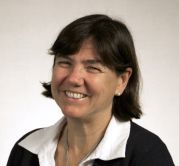 Catherine Royer is an internationally recognized expert in biological fluorescence, protein folding and biomolecular interactions. She obtained her Bachelor’s degree in Biochemistry in Paris at the University of Pierre and Marie Curie, and her Ph.D. in Biochemistry at the University of Illinoisat Urbana-Champaign. After an NSF-CNR postdoctoral fellowship in Paris, she became User Coordinator of the Laboratory for Fluorescence Dynamics at UIUC. She then became Assistant and then Associate Professor at the University of Wisconsin-Madison. In 1997 she moved back to France as Director of Research, and then Director of the Center for Structural Biochemistry in Montpellier. In 2014 she moved to the Rensselaer Polytechnic Institute in Troy NY as a Chaired Constellation Professor in Biocomputation and Bioinformatics.
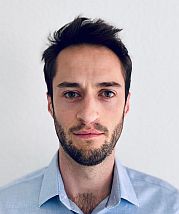 Dominique Laniel is an Associate Professor at the Centre for Science at Extreme Conditions (CSEC), University of Edinburgh (United Kingdom). His research focuses on the synthesis and characterization of novel materials under extreme pressures and temperatures, with a particular focus on nitrides and carbonitrides of relevance as high-energy-density and superhard materials.
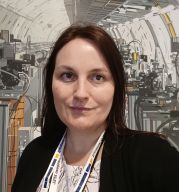 Carmen Sanchez-Valle is a Professor of Mineralogy at the University of Münster (Germany). Her research focuses on the physical-chemical properties materials (fluids, melts, solids and ices) at high pressure/high temperature conditions to unravel the dynamic processes that shape the evolution of deep planetary interiors. She received a Master degree in Condensed Matter Physics at the University of Valladolid (Spain) and University of Lyon (France) and a PhD in Earth and Planetary Sciences at the Ecole Normale Superieure de Lyon. After a postdoc at the University of Illinois Urbana-Champaign, she was an Assistant Professor at ETH Zürich before joining the University of Münster in 2014.
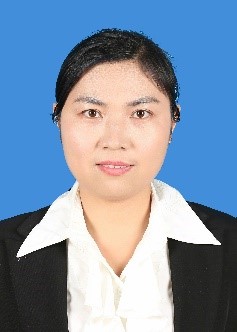 Dr. Xiaodi Liu is a Professor and Doctoral Supervisor at the Institute of Solid State Physics, Chinese Academy of Sciences (CAS). She received her Ph.D. from the University of Science and Technology of China in 2013 and joined the Institute of Solid State Physics as an Assistant Professor, later promoting to Associate Professor (2018) and Full Professor (2023). She also conducted visiting research at the University of Edinburgh in 2018 and 2022.